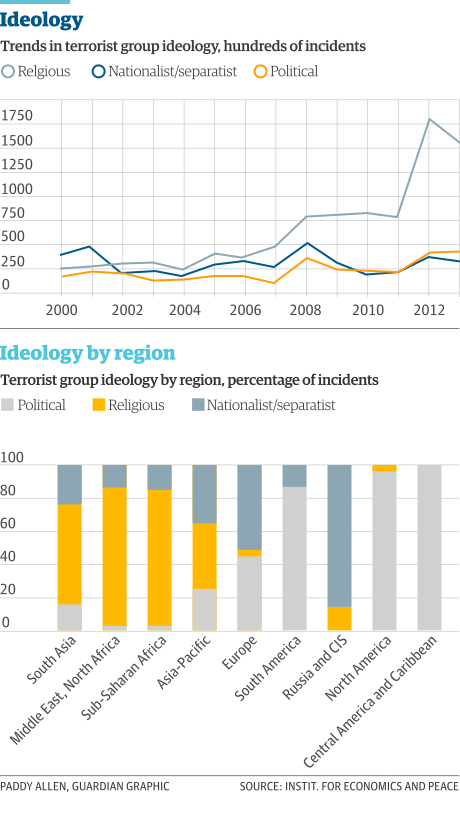
Religious extremism has become the main driver of terrorism in recent years, according to this year’s Global Terrorism Index.
The report recorded 18,000 deaths in 2013, a rise of 60% on the previous year. The majority (66%) of these were attributable to just four groups: Islamic State (Isis) in Iraq and Syria, Boko Haram in Nigeria, the Taliban in Afghanistan and al-Qaida.
Overall there has been a fivefold increase in deaths from terrorism since the 9/11 suicide attacks.
The report’s authors attribute the majority of incidents over the past few years to groups with a religious agenda.
Before 2000, it was nationalist separatist terrorist organisations such as the IRA and Chechen rebels who were behind the most attacks. The number of incidents from nationalist separatist groups has remained relatively stable in the years since while religious extremism has grown.
The prevalence of Islamist groups in Iraq, Afghanistan, Pakistan, Nigeria and Syria is the main driver behind these trends.
This report is interesting because it flies in the face of arguments given by Islamic apologists, like Reza Aslan, who argue that religion is NOT the trigger for extremist views or violence.
And in fact making this connection was what got Bill Maher into so much trouble recently.
However I would be quick to mention that just because it seems that Islam is the religion of choice for most terrorists today, there is still plenty of terrorism in the name of Christ as well.
And it could be argued that in the not too distant past Christian terrorism terrorized communities around the world for many hundreds of years before it was brought under some semblance of control by more civilized minds.
As Steven Weinberg once said, "Religion is an insult to human dignity. With or without it you would have good people doing good things and evil people doing evil things. But for good people to do evil things, that takes religion."